




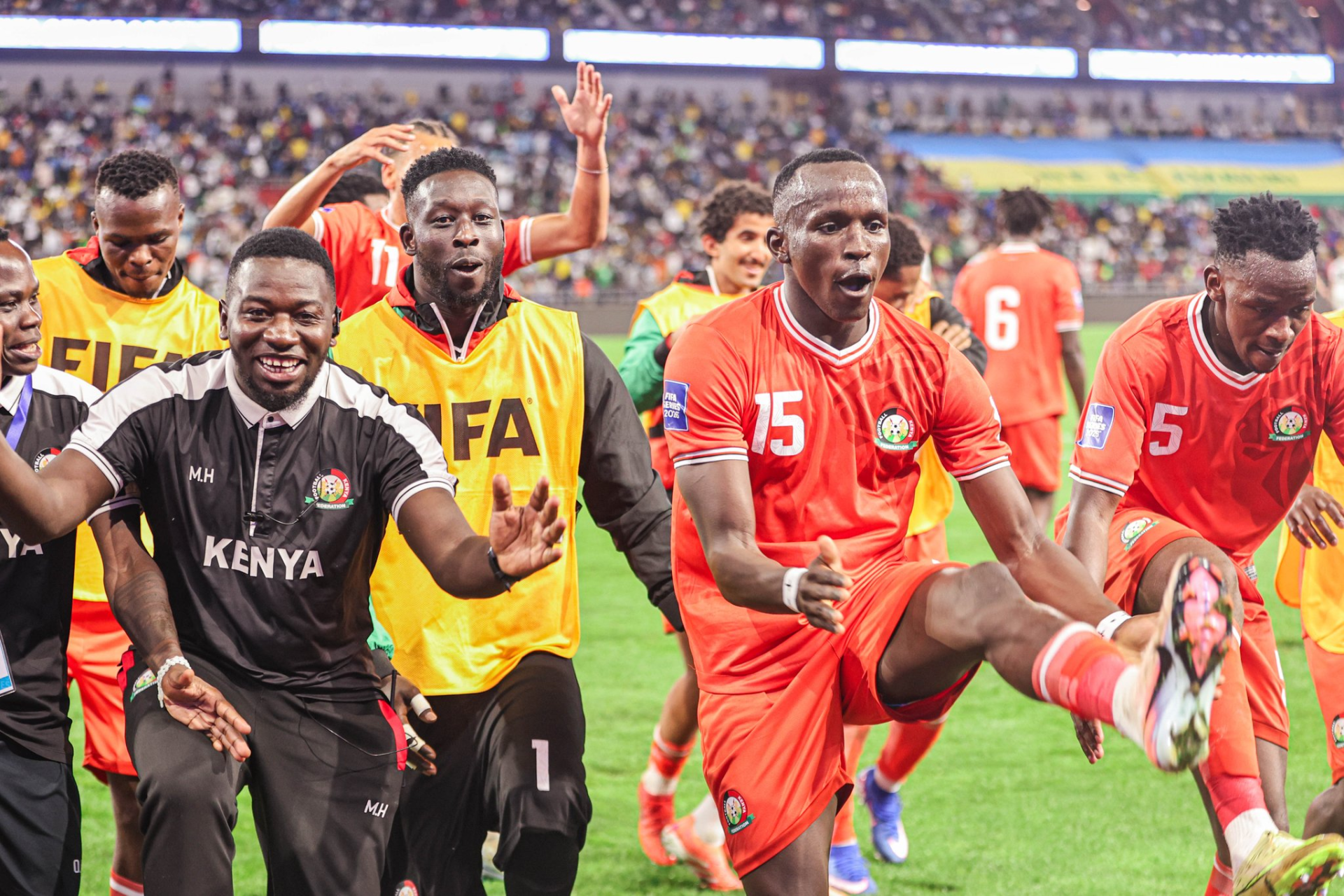
Benni McCarthy struck a measured but optimistic tone after Harambee Stars bowed out of the FIFA Series semifinal in Kigali, insisting the narrow defeat signals progress rather than regression.
Kenya’s 5-4 loss on penalties to Estonia national football team—following a hard-fought 1-1 draw at Amahoro Stadium—offered a revealing snapshot of a team still under construction but increasingly capable of competing beyond its traditional limits.
McCarthy was quick to contextualize the result. Estonia arrived with a deeper international résumé, having recently faced elite European opposition including Italy and Norway. Kenya, by contrast, is still rebuilding cohesion and identity. Yet the gap in experience was not reflected on the pitch for long.
After a tentative opening spell marked by nerves and caution, Harambee Stars grew steadily into the contest. The second half, in particular, saw a visible shift in authority—Kenya pressed higher, controlled possession more confidently, and imposed themselves physically and tactically. For McCarthy, that transformation was the most valuable takeaway.
He pointed to the players’ composure and mental resilience, especially against a technically disciplined European side. Losing on penalties, he suggested, should not overshadow the broader trajectory. In his assessment, the team demonstrated maturity, personality, and the capacity to adapt under pressure—traits essential for tournament football.
The decisive moment came in the shootout, where Richard Odada saw his Panenka attempt sail over the crossbar, handing Estonia the edge after they had converted their preceding kick. It was a fine margin in a contest that had become increasingly balanced as it progressed.
McCarthy’s focus now shifts to consistency. While encouraged by the dominant second-half display, he emphasized the need for Kenya to start matches with the same intensity they showed after the break. Sustaining that level from the first whistle, he argued, is what separates competitive sides from winning ones.
Looking ahead, the coach framed the performance as part of a longer-term build toward 2027. His message was clear: the foundation is taking shape, and if the current rate of progression holds, Harambee Stars will not just compete—they will contend.