




Controversy Erupts After Designer Claims Disabled People Don’t Need Fashion
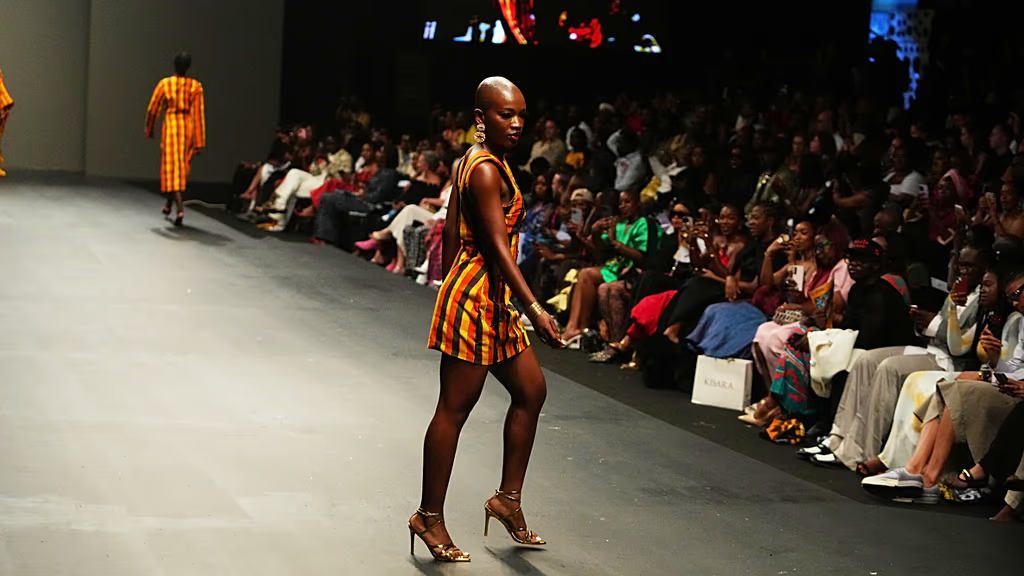
A designer, who was once told that “disabled people don’t need fashion,” has turned her anger into action, launching an adaptive clothing brand that recently featured on the catwalk at London Fashion Week.
Hanan Tantush first explored customised clothing for disabled people while still a student, inspired by her grandfather’s challenges following cancer surgery. It was during this early work that she heard the dismissive remark that would later fuel her mission.
“That sentence made me so angry,” she recalls. The 23-year-old from Chester believes the fashion industry has made strides over the years, but says that “disability is still treated as a niche,” highlighting the ongoing need for inclusive design.
Her response was to launch Intotum, an adaptive fashion brand — the name means “as a whole” in Latin — which she showcased at London Fashion Week earlier this year.
“Empowered, Not Pitied”
The concept had been years in the making, inspired by her grandfather, Michael Myers, who struggled to find trousers that accommodated his stoma bag.
“Every pair of trousers rubbed or pressed against it,” Hanan explains. “The only things he could wear comfortably were jogging bottoms, and he hated how they looked.”
Hanan recalls her grandfather as a Merchant Navy engineer who always wore his uniform with pride.
“Every memory I have of him is of him looking sharp — trousers pressed, shirt tucked in, shoes polished,” she says.
But the stoma bag began to affect his lifestyle, accessibility, and clothing choices. “He often mentioned how difficult it was to manage his stoma bag in public toilets, especially at football. Over time, he even stopped playing bowls, a game he’d enjoyed for 40 years,” she explains. “Seeing clothing strip away his confidence like that really broke something in me.”
Since then, Hanan has dedicated herself to creating and promoting stylish clothes for people with a range of disabilities and neurodivergences, emphasizing that she wants them to “feel empowered, not pitied.”
About 17 million people in the UK—roughly a quarter of the population—live with a disability, yet Hanan says that “disability is still treated as a niche” in fashion.
“When major brands launch ‘adaptive’ lines, they’re often just tracksuits in different colours,” she explains. “People tell me they want to feel stylish, to walk into a room and be noticed for their outfit, not their condition.”
Her collections include wheelchair-friendly trench coats and capes, side-opening trousers, and garments with magnetic or Velcro fastenings instead of buttons. Inspired by her grandfather’s experience, some items also feature discreet pockets for stoma bags.
“He tells everyone about my business. He knows he inspired it all,” Hanan says.
Hanan hopes to expand her collections and eventually open in-store branches, emphasizing that “fashion—the very thing that should help us express who we are—has shut out an entire community.”
She explains that giving disabled people the freedom to dress without worrying about limitations has led to an outpouring of messages from customers.
Some have shared that it’s the first time they’ve been able to dress independently in years. “That’s what success looks like,” Hanan says.